

A coach can watch an athlete land from a jump and tell you something looks off. A biomechanical assessment tells you which joint, by how many degrees, on which side, and whether it changed since last month. The gap between an impression and a number is the point of the exercise.
What a Biomechanical Assessment Actually Is
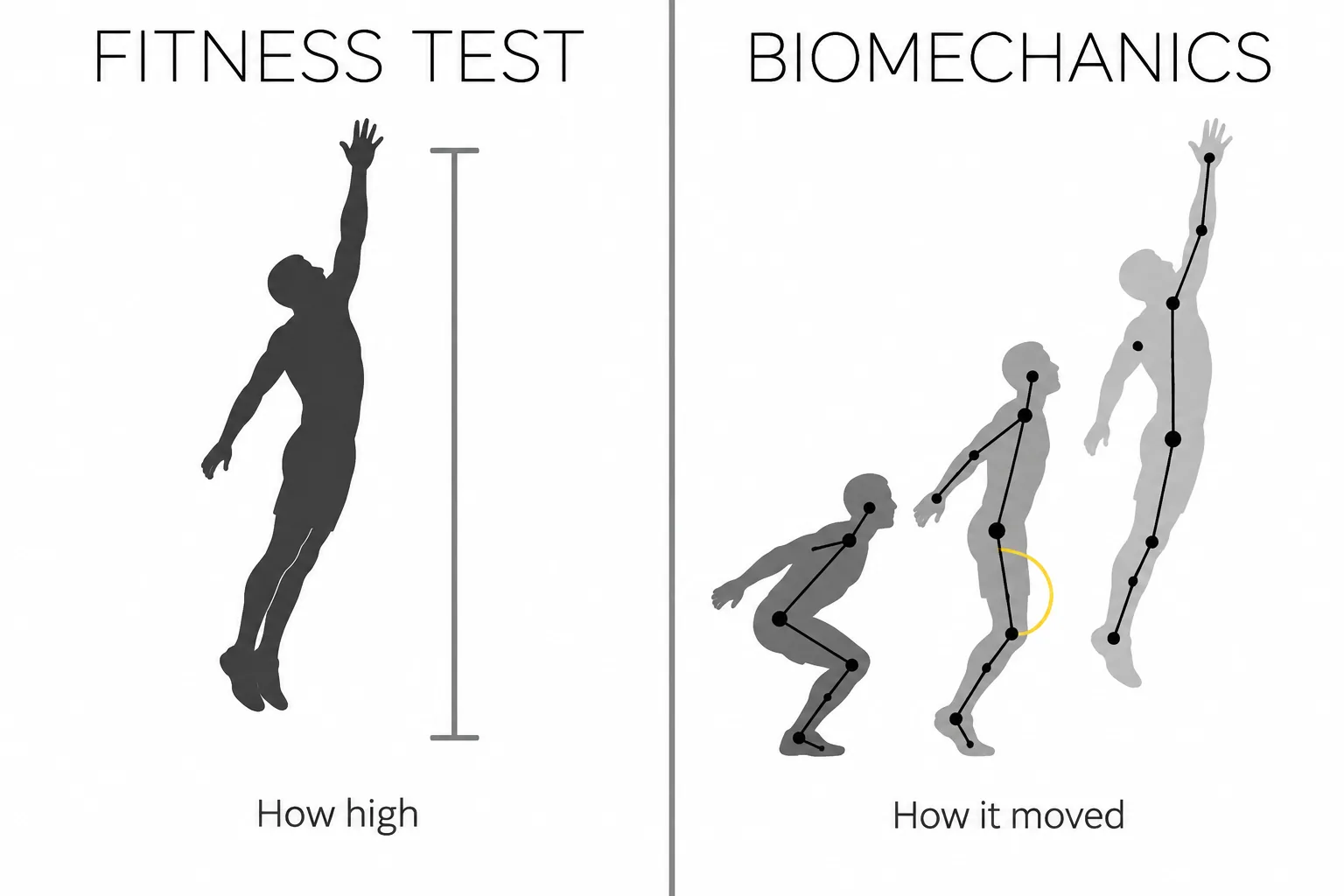
A biomechanical assessment for athletes is a structured measurement of how joints, limbs and body segments move during a defined task. The output is movement data: joint angles, segment positions, timing, and left-versus-right comparisons. It is not a strength score, and it is not a physical exam.
Two distinctions matter early. A sports biomechanical assessment is not the podiatry-style gait and foot assessment that dominates search results for the term. Both are legitimate, but only one is built around athletic tasks. It is also not a fitness test: a fitness test scores the result (how high, how fast, how many), while a biomechanical assessment measures how that result was produced.
Typical test tasks include the countermovement jump, drop landings, bilateral and single-leg squats, change-of-direction cuts, running stride, and sport-specific movements such as a throw or a kick. Laboratory 3D motion capture is treated as the gold standard for evaluating biomechanical risk factors, which is why other methods are judged against it.
Who runs it: strength and conditioning coaches, athletic trainers and physical therapists, and sport scientists. In a club, all three read the same report for different reasons.
What Happens During a Biomechanical Assessment, Step by Step
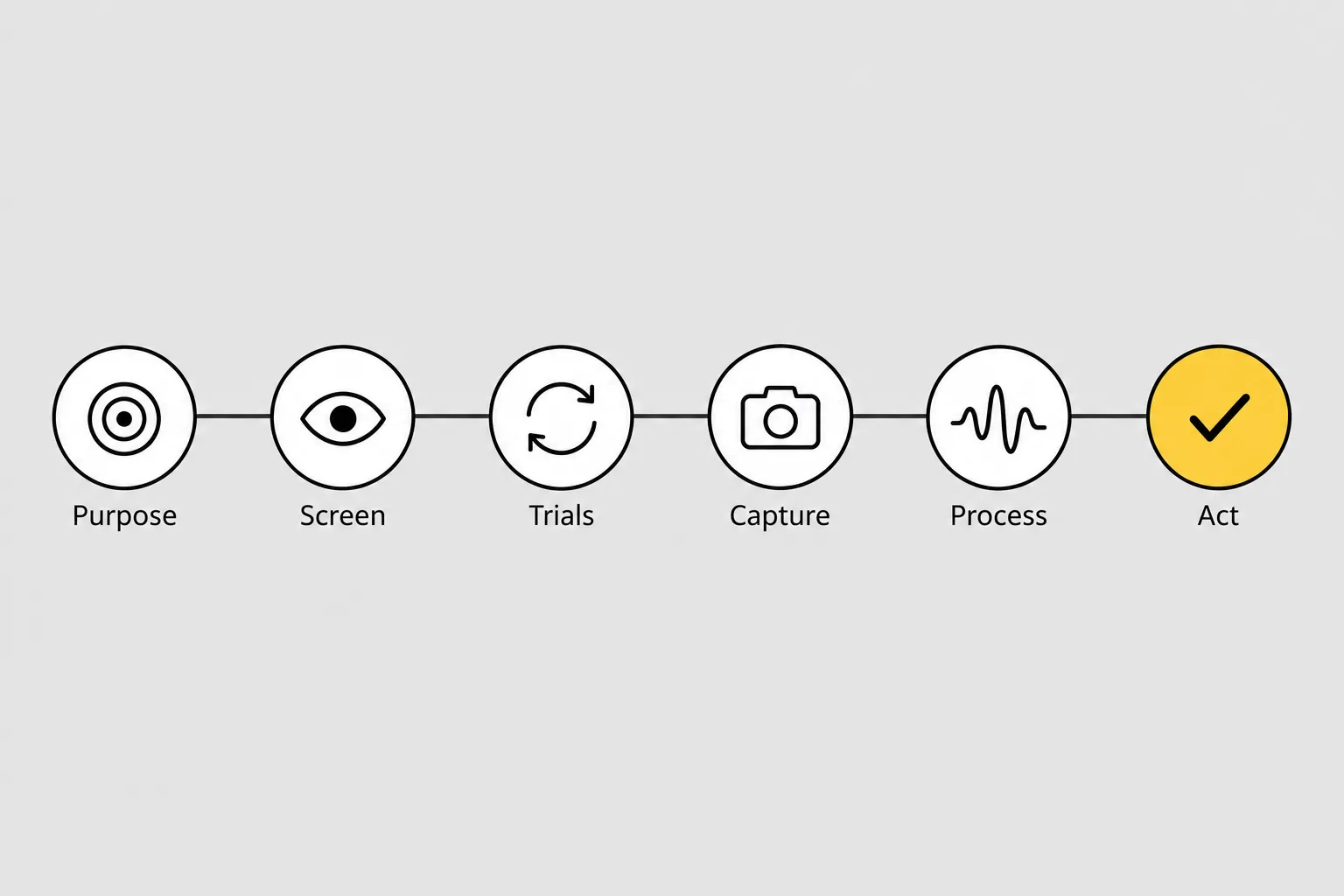
1\. Purpose setting. Staff agree on why the athlete is being tested: establishing a baseline, in-season monitoring, or a return-to-play checkpoint. The purpose sets the task list.
2\. Visual screening. A practitioner watches basic patterns: standing posture, walking, a squat, a lunge. This catches obvious issues and frames the recorded trials.
3\. Recorded trials. The athlete performs the chosen tasks, usually two or three repetitions each, inside a defined capture area.
4\. Measurement capture. Depending on the setup, this means camera systems, force measurement through plates in the floor, wearable sensors, or a combination.
5\. Processing. Raw capture becomes joint angles, positions through each phase of the movement, and left-right comparisons.
6\. Report and action. Staff turn the report into something concrete: a load adjustment, a targeted exercise, a rehab progression, or a decision to retest sooner.
Duration varies by method. A laboratory session with marker placement can absorb a training block for a handful of athletes. Camera-based team testing with OnTraq runs about 90 seconds per athlete, which puts 20 athletes inside a 30-minute window.
What a Biomechanical Assessment Measures
- Joint angles. Knee, hip, ankle, trunk and shoulder positions through the whole movement, not only at the endpoints.
- Positions and alignment through key phases. Where the body is at initial contact, at peak flexion, at push-off.
- Symmetry. How load and movement are shared between limbs. Research on interlimb asymmetry finds that differences in movement patterns between limbs play a critical role in overall movement quality, which is why asymmetry sits in so many return-to-sport criteria.
- Timing and sequencing. Whether segments fire in the expected order, and how that shifts under fatigue.
- Force measurements. Where force plates are integrated, ground contact forces and load distribution add the force side of the picture. OnTraq’s Silver tier includes force integration and the full sport-specific movement library.
A report that cannot be read in those terms will not change anyone’s Tuesday session.
In practice, these translate into the language performance staff already use: asymmetry, load, readiness, availability, return-to-play criteria.
Why the Baseline Matters More Than the Single Test
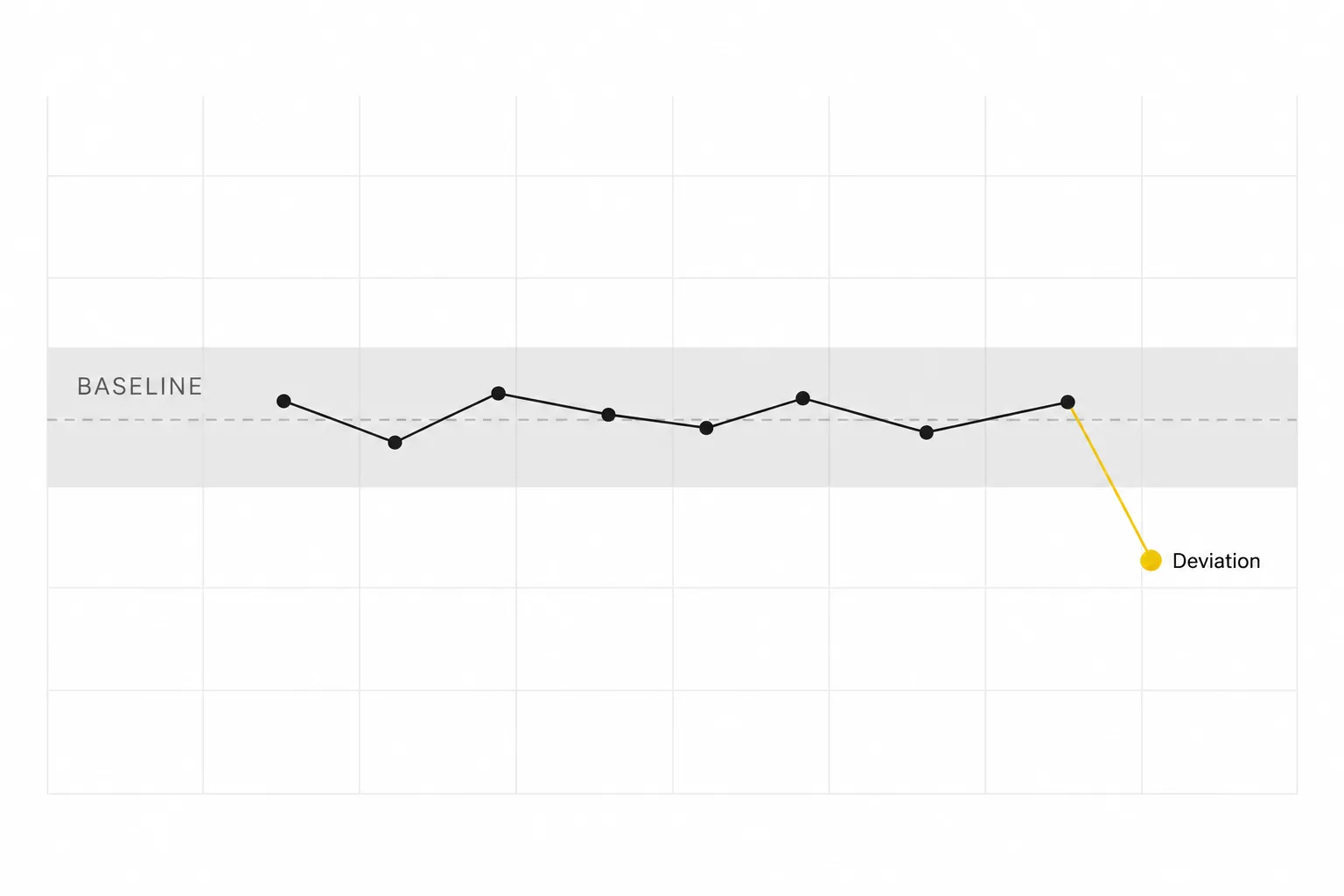
An assessment is more useful as a reference point than as an event. A single test tells you what an athlete looked like on one afternoon. It cannot tell you whether that is normal for them.
A baseline is the athlete’s own reference, captured on a healthy, rested day. Every retest is compared against that athlete rather than a population average, which matters because a 6-degree difference can be unremarkable for one player and a clear change for another.
Deviation from baseline is the signal: reduced jump height, a shift in landing mechanics, one leg quietly taking less load. Reading that shift depends on measurement consistency, and for camera-based testing that begins with markerless motion capture accuracy.
Longitudinal monitoring works when values come from repeated test-retest assessments across multiple days under consistent conditions, because consistency is what separates real change from measurement noise. If the number moves depending on who ran the test, the trend is unusable.
The practical constraint is cadence. A protocol only gets repeated often enough to build a trend if it fits inside a warm-up or cool-down. In OnTraq’s persona research, about half of performance staff name baseline monitoring their top priority, and time is the reason it does not happen.
How Teams Use the Results
Training decisions.
Adjust load for an athlete drifting from baseline, target a specific pattern, individualize programming instead of running the whole group through the same block.
Performance work.
Correct mechanical inefficiency in jumping, sprinting and change of direction, where small position changes cost output.
Return to play.
Objective movement data sits alongside clinical judgment and gives athletic trainers and physical therapists something documented to show a physician. A review of biomechanical screening tools for return-to-sport evaluation reports that 3D motion capture and force plates have advanced this work, while noting that their predictive power across different athletic populations is still being established.
Injury risk.
Movement data can show landing and cutting patterns associated with higher injury risk. Evidence for predicting injury in an individual athlete is more limited: a 2025 systematic review found that predictive validity across athletic populations remains unclear. Use the patterns to target training, not to forecast who will be injured.
Season monitoring.
Trends over weeks and months on a dashboard, rather than a PDF filed after testing week.
One limit, stated plainly: this data supports coaching and clinical decisions. It does not replace them, and it is not a diagnosis.
The Technology Behind the Numbers
Marker-based optical systems. The research reference point for accuracy, but marker placement is time intensive and subject to human error, which is where between-session and between-operator differences creep in. Testing a squad can cost half a session or require a specialist.
Camera systems without markers. Markerless motion capture uses multiple synchronized cameras, where computer vision detects body landmarks directly from digital images instead of from reflective markers. The athlete steps in and moves normally. Independent validation supports this approach with limits.
A 2026 systematic review comparing markerless and marker-based capture in jump-landing tasks found moderate to high validity for several lower-limb measures, strongest in the sagittal plane, and concluded that further validation is needed before widespread use.
Because a small change only counts if it exceeds a system’s measurement error, repeatability across sessions matters as much as agreement with a lab system.
Basic video analysis. Fast and cheap, but angles are estimated by eye. Fine for cueing, weak for tracking a 4-degree change.
Wearables and sensors. Useful data, but charging, syncing and athlete compliance become somebody’s job, and the sensors say little about joint positions.
Force plates. Strong force data with no picture of what the joints did to produce it. Best paired with movement measurement.
OnTraq sits in the second group: an eight-camera 3D motion capture system that builds a personal skeleton model from each athlete’s own body dimensions, detects the movements automatically, and returns cloud-hosted reports within minutes.
It is built on Qualisys’ foundation of biomechanical accuracy, developed since the 1980s. There is more detail on how the OnTraq system works if you want the mechanics. The design goal is accuracy and ease together, not one traded against the other.
Why Most Team Assessment Programs Fail
The science is rarely the problem. The operations are.
Related readingMarkerless Motion Capture Accuracy: Error RangesRead the guide →| Problem | What goes wrong | Fix |
|---|---|---|
| Testing takes too long | It happens once in pre-season and never again, so there is no trend to read. | A short protocol. |
| Results vary by operator or setup | Staff quietly stop trusting the numbers. | One consistent method regardless of who runs it. |
| Testing disrupts training | Coaches resist anything that costs a training block, and they are right to. | Testing that fits the warm-up window. |
| Data lands in a folder nobody opens | Collection is not the deliverable. A decision is. | A dashboard showing trends rather than a static report. |
The fixes map one to one: a short protocol, one consistent method regardless of who runs it, testing that fits the warm-up window, and a dashboard showing trends rather than a static report.
How Often Should Athletes Be Assessed?
- Pre-season: baseline capture for every athlete on the roster. This is the anchor for everything after.
- In-season: regular checkpoints, plus a retest after heavy competition blocks or congested fixtures.
- During rehab: checkpoints at each stage, feeding return-to-play criteria.
- Post-season: comparison against the opening baseline to shape the off-season plan.
Frequency is governed by session length, not ambition. Teams adopting a system usually scope and install in the off-season so staff are trained before the pre-season baseline window opens.
Frequently asked questions
What is biomechanical analysis in sport?
What are some biomechanics in sport examples?
Where can I find a biomechanical assessment near me?
Do I need to be injured to be assessed?
How long does an assessment take?
Is it the same as a sports performance assessment?
Getting a Program Started
In most organizations the practitioner builds the internal case, and the performance director, athletic director or general manager signs off. Worth knowing before you start: the person who needs the data and the person who approves the budget are usually not the same person.
OnTraq is sold as a monthly subscription covering hardware, software, cloud storage, installation, on-site staff training and ongoing support, with no large upfront equipment purchase. Bronze suits teams starting a baseline program. Silver, the most popular tier, adds the full sport-specific movement library, API integration, force integration and a personalized trend dashboard.
Gold adds dedicated customer success and priority hardware replacement. Early adopters currently receive Silver at Bronze pricing, a framework in effect until at least January 2027. Current detail sits on the subscription plans and tiers page.
If you are planning a baseline program for next pre-season, the scoping conversation needs to happen while the current one is still running. Book an introductory call and demo with OnTraq’s athlete baseline testing system and we will assess your facility, confirm camera placement, and scope the tier that fits your roster.